

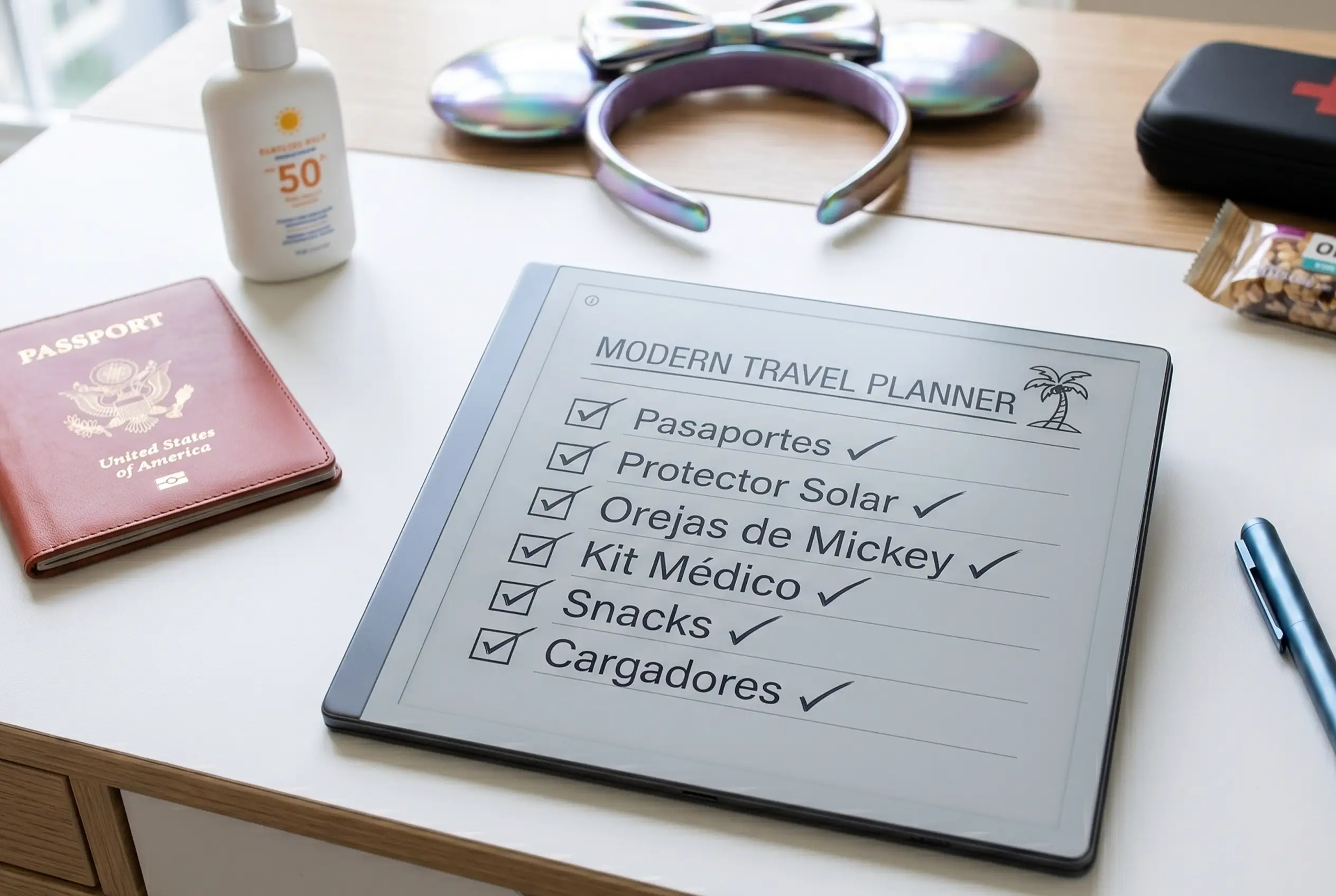
Disney World is the most visited destination in the world and also one that generates the highest expectations. For a child who has spent weeks imagining the moment they first see the castle, the reality of the park, with its lines, the heat and the exhaustion of walking for hours, can be overwhelming if there is no preparation. Disney trips that go well almost always share one thing: the parents did the preparation work before arriving, not just the itinerary. This is the guide to doing it right.
A child who arrives at Disney without prior context can feel disoriented by the size of the park, frustrated by the lines or scared by attractions that look harmless from the outside. A child who arrived prepared knows what to expect, has favorite characters identified, understands that lines are part of the process and has tools for handling the hard moments.
Preparation does not mean taking away the surprise. It means building the right frame so the experience becomes what the child expects it to be, or better.
Start by identifying which characters connect best with your child based on their age and personality. For kids ages 3 to 6, the classic films (Sleeping Beauty, Toy Story, The Little Mermaid) work well. For kids ages 7 to 12, recent films (Encanto, Moana, Raya) and the Marvel and Star Wars franchises open many possibilities at Hollywood Studios.
Watching the films together in the weeks before the trip builds the emotional context for the park. When the child sees Mirabel from Encanto at Disney Springs or walks into Galaxy’s Edge, it is not a generic experience. It is the world of something they already love.
YouTube has hundreds of family vlogs documenting their Disney visit in complete detail. Watching a walkthrough of Cinderella Castle, Tron’s queue or the fireworks show gives the child a mental map of the place before arriving. That reduces anxiety about the unknown and increases anticipation for the specific.
Lines are part of Disney. A child who arrives thinking everything is instant will get frustrated at the first 30-minute queue. Talking about lines before the trip as “the part you do to get to the most exciting thing” is more effective than avoiding the subject and hoping it does not become a problem.
It helps to have an entertainment strategy ready for lines: a question game, songs, a small sketchbook or a Disney playlist to listen to while waiting.
If there are attractions the child will not be able to do because of height, it is better they know before arriving. Finding out in line, after waiting 20 minutes, creates a disappointment that can affect the rest of the day. Framing it as “that one is for when you are bigger and ready” works better than being surprised at the park.
Orlando in summer has a heat that many kids, especially those coming from cooler climates, do not anticipate. Going for walks at midday in the days before the trip, however trivial it sounds, helps the body adjust. And mentioning the heat in the preparation normalizes the feeling for the child: knowing “it will be hot but we will have water and shade” is better than discovering it as an unpleasant surprise on the first day.

What goes in the day bag can be the difference between a manageable day and one that gets complicated by avoidable details.
What cannot be left out:
What is better left at home:
No Disney day with kids is perfect. Preparation helps, but moments of crying, meltdowns or exhaustion are still part of the experience. How those moments are managed determines whether the day recovers or falls apart.
Kids who are about to crash from tiredness rarely say it in words. They say it with mood changes, resistance to walking or tears over small things. Learn to read those signals before the collapse becomes inevitable. A 20-minute break sitting in the shade with a snack can save the rest of the day.
In a park as large as Disney, a parent’s fear of a child getting lost is real. Before entering, define the meeting point if anyone gets separated. Some parents write their phone number on the child’s arm with a permanent marker or put an identification bracelet on them. It takes one minute and prevents the worst scenario.
The attempt to maximize the day inside the park is the source of most difficult moments with kids. A child who goes at their own pace, who can stop to meet a character without being rushed, who has a relaxed lunch and still has energy for the end of the day, enjoys the experience far more than one who was dragged through an adult’s packed itinerary.
Disney is full of stores and opportunities for kids to ask for things. Defining before the trip how much spending money each child has for souvenirs, and that this limit is the limit, turns every purchase into the child’s decision rather than a negotiation with the parents in the store aisle.
A vacation home close to Disney makes this routine easier. The kitchen allows a quick breakfast before leaving and the proximity to the park removes the pressure of heading out too early.
It depends on the child. Many kids ages 3 to 4 have a very rich experience when the itinerary is built for them: character meets, gentle rides and a relaxed pace. From ages 7 or 8, most kids can enjoy the park with less route supervision.
Never force it. If the child says they do not want to go on a ride, the right response is to accept it without pressure. Disney has enough content for a full day to be memorable without doing a single adrenaline attraction.
My Disney Experience is the official app and is indispensable. It shows live wait times, manages Lightning Lane, handles restaurant reservations and shows the interactive park map.
It depends on the park and demand. In peak season, popular meets (Mickey, Elsa, Spider-Man) can have 30 to 60-minute lines. Planning two or three meets per day is realistic without letting them consume all the available time.
Disney has an established protocol for lost children. All park employees are trained for this situation and there are designated meeting points. The most important thing is for the child to know their full name and their parents’ names, and if possible to have a contact number written on their wrist.
The parents who most enjoy Disney trips with their kids are not the ones who know the park best. They are the ones who arrived with prepared kids, realistic expectations and the willingness to go at the group’s pace rather than the itinerary’s pace. The castle impresses just as much prepared as by surprise. The difference is in how you arrive at that moment.





No Comments